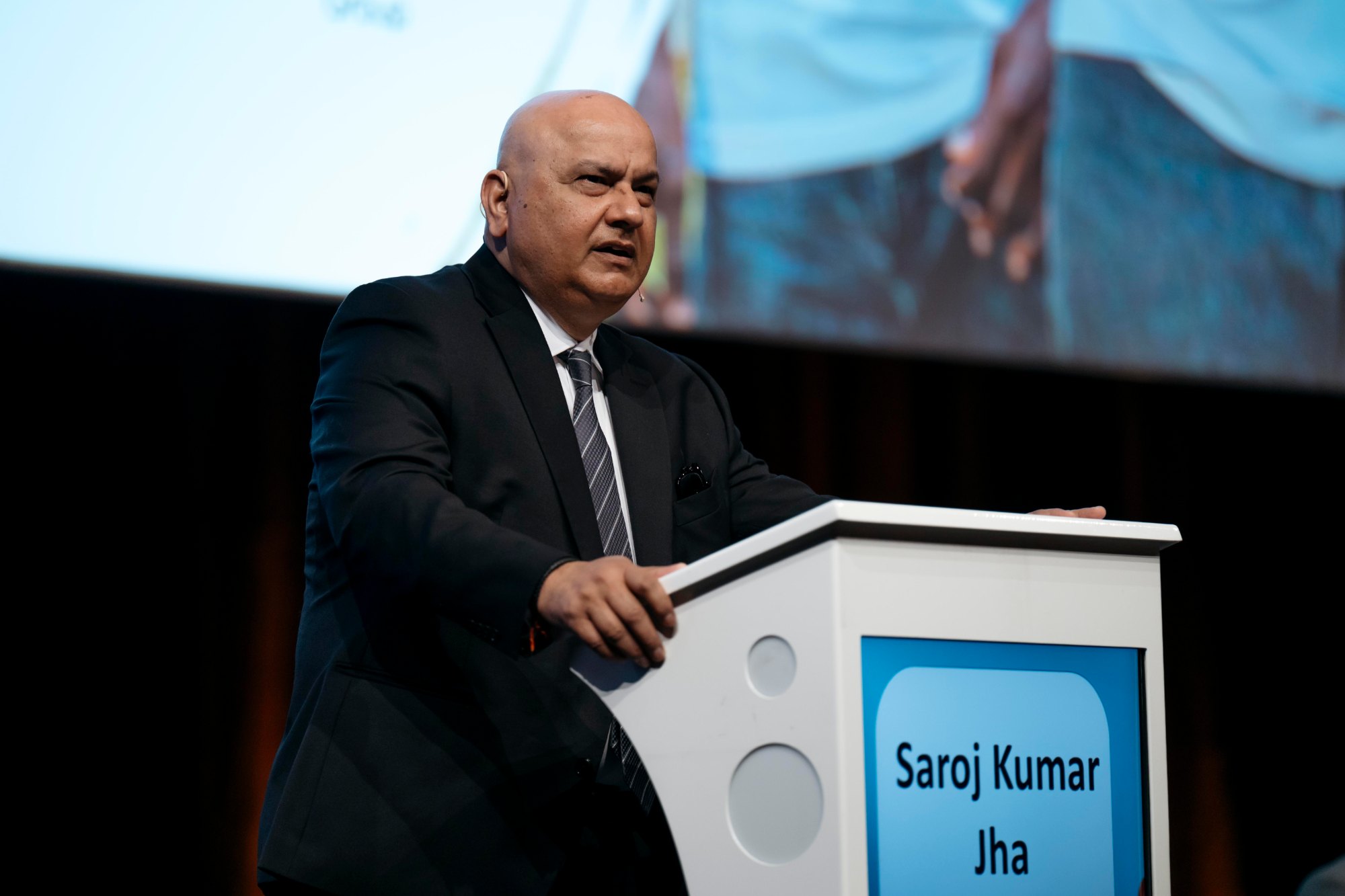
Saroj Kumar Jha, Global Water Director, World Bank Group
Ahead of the Conference, GWI has asked thought leaders what their expectations are - and who they'd like to have dinner with.
What can this conference achieve that others have failed to?
What makes this conference important is its focus on implementation and investment, including a dedicated dialogue on financing.
With 1.2 billion young people entering the workforce in developing countries over the next decade, creating jobs is more urgent than ever. And water is essential to that.
Yet investment in water remains far below what is needed. No country or institution can address this challenge alone.
Abu Dhabi is our opportunity to change the pace and scale of investment in water. We need to leave the conference with stronger commitments, more financing, and a shared determination to reach many more people, much faster.
What single announcement, decision or deal would make the conference worthwhile for you?
I would like to see a strong commitment from countries, development banks, and private investors to significantly increase investment in water.
Through Water Forward, we have set an ambitious goal of reaching over one billion people with improved water security by 2030. But why stop there? If more countries take the lead, more partners come on board, and we mobilise more investment, why can't we double or even triple that number?
I would like Abu Dhabi to be the moment when we raise our collective ambition and commit to the actions and investments needed to deliver on it.
The real challenge is creating the conditions for money to flow into water.
What are you bringing to Abu Dhabi: a commitment, a deal, or an ask?
First, we are bringing results. Water Forward is working, and the evidence is strong. Since the launch of the initiative in April 2026, countries have been taking the lead, advancing reforms, and bringing partners together to unlock investment. In Abu Dhabi, we expect more countries and partners to join this effort.
Second, we are showing that water is a strategic, investible asset. We are bringing partners together around concrete projects, with the aim of turning more investment opportunities into real deals.
And finally, we are bringing energy and commitment. We know what works, and we know we can do much more. We want to build on this momentum, think bigger, and reach many more people with investments that make a real difference in their lives.
What is the biggest obstacle to money reaching the sector, and who has the power to remove it?
I don't think the biggest problem is a lack of money. The real challenge is creating the conditions for that money to flow into water. Too many projects are simply not ready for investment.
Changing this requires action from everyone. Governments have an important leadership role in advancing reforms and creating an enabling environment, while development banks and other partners can help prepare projects, reduce risks, and bring in private capital. The private sector also needs to be part of the solution.
This is why in Water Forward we are putting countries in the driver's seat through their Water Compacts. When countries lead and partners come together, we can turn water priorities into investments that deliver results.
Who would you invite to your dream UN Water Conference dinner?
I would invite the counterparts from low-income and lower-middle-income countries that were able to recover at least 75% of their water operating and maintenance costs through tariffs and have non-revenue water below 20%. I would really like to learn about their experiences and how we can achieve these results on a larger scale.