Private sector to play 'significant' role at UN Conference
With the UN Water Conference fast approaching, the man leading the preparations from the UAE side explains his vision.

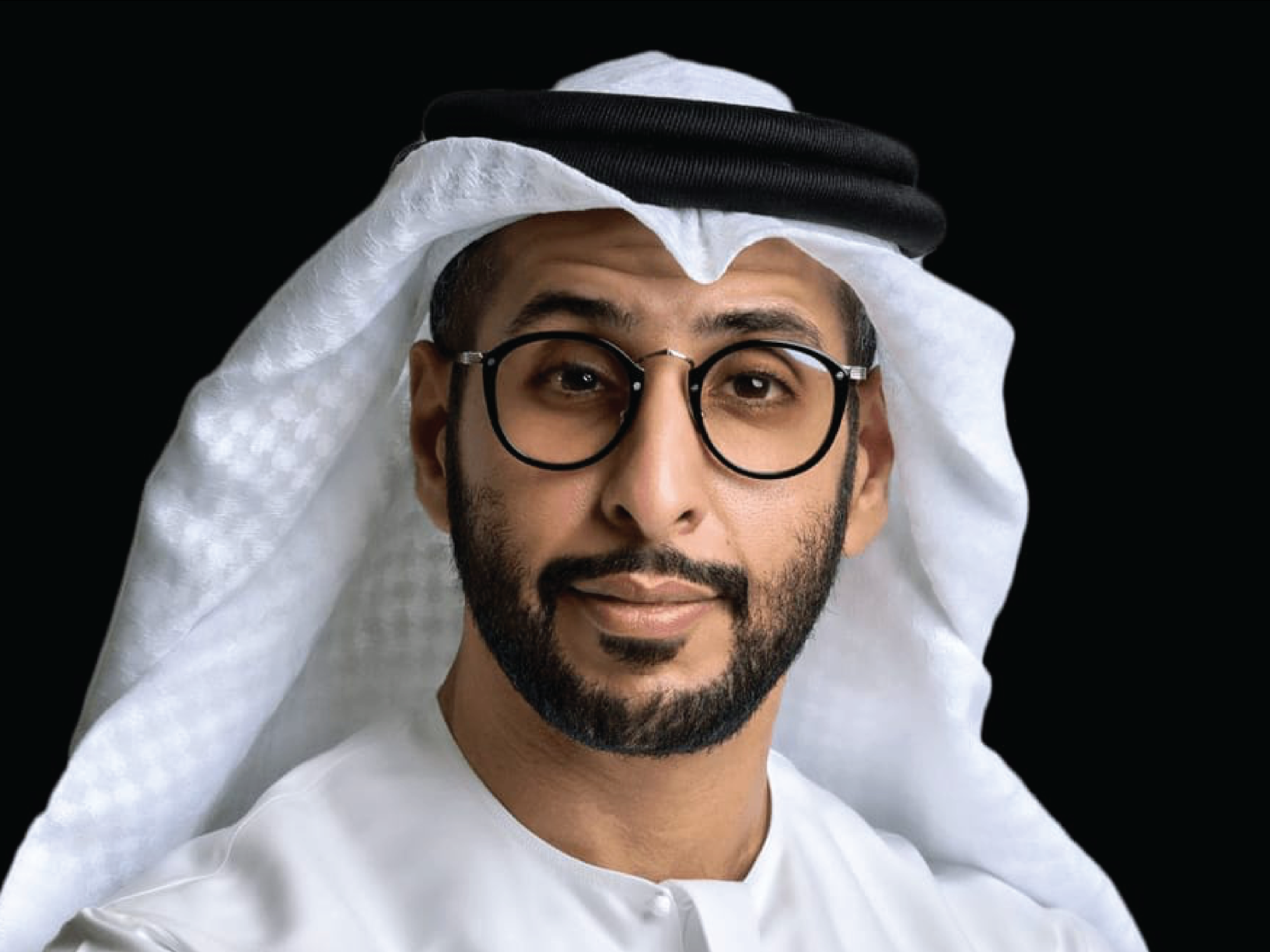
The private sector will play a pivotal role at this year’s UN Water Conference, His Excellency Abdulla Balalaa, UAE Assistant Minister of Foreign Affairs for Energy and Sustainability, has told GWI in an exclusive interview.
Balalaa, who is leading the UAE’s preparations for the event – set to take place in Abu Dhabi from 8-10 December – made it clear that his government’s priorities in co-hosting the event with Senegal are to encourage the inclusion of investors, and to accelerate the implementation of solutions. “The private sector’s role is significantly important because they are the implementers,” he emphasises. “The opportunity is huge for them, and the shortage and demand is there.”
With public money currently accounting for the overwhelming majority of capital expenditure in water, he sees considerable scope for private finance and project development.
“My message to the private sector is this: all the stakeholders for water will be at the UN Water Conference, represented at the highest level possible. Governments, banks, technology owners, but also investors who can partner with the private sector."
The first challenge, however, is engaging politicians at the highest level on the water challenge. “We have all the intention to bring the UN Water Conference at the levels of heads of state, showcase how important this precious resource is, and how big of an enabler it can be, not only from a humanitarian perspective, also from being a backbone for any successful economy.”
But politicians on their own won’t solve the problem. “In order to really move the needle, there must be cooperation between stakeholders,” Balalaa highlights. “Of course, you need the leadership, the government side, but also you need financiers like multilateral development banks at the table, and also you need the businesses and the investment community to be at the table. I would add to that researchers, technology owners, and innovators.” The traditional solutions, he argues, are simply not keeping pace with the scale of the water challenge. “Convening them around one table, but also with the focus on implementation, is our objective.” This focus on implementation is core to the UAE’s thinking about the conference.
Overcoming traditional constraints
Balalaa acknowledges that money itself is only part of the solution. Capital may be available from development banks and other financiers, but projects will not happen unless countries create the conditions under which it can be deployed.
“The link is provided by businesses and investors,” he observes. “If these geographies are not ready and they don’t have the right environment with the right guarantees in place, the finance will not go there.” Political instability, inadequate distribution and transmission systems, and governments’ reluctance to provide credible offtake arrangements can all make otherwise necessary projects unfinanceable.
Here, the problem is not capital, but capacity. “Some countries’ financing or capital is not their issue. The issue is the know-how and how to deploy it in the best, most efficient way,” he said. Balalaa points to the World Bank’s Water Forward initiative, with its focus on country compacts, capacity-building and creating a clearer pathway towards finance, as one mechanism for bridging this gap.
Deploying appropriate technology is also a key part of the solution. Balalaa highlights agriculture, where new approaches can dramatically reduce water requirements, and the UAE’s own experience of managing extreme scarcity through desalination, wastewater reuse, and increasingly data- and AI-enabled water management. The UAE, he advocates, wants to share the cumulative knowledge it has developed as a country without rivers and with very limited rainfall, while recognising that solutions will have to be adapted to individual countries.
Behind these practical barriers, however, Balalaa sees a deeper problem: water has never achieved the political status accorded to issues such as climate and energy.
Water appears on the agenda at other international meetings, but seldom occupies centre stage. “Because it’s important and it intersects with multiple sectors, you will find it always on other platforms, but as a secondary element, it's always held hostage to energy, climate change, and – needless to say – agriculture,” he emphasised. “To be placed as a subject with all these important elements that it intersects with has never happened before, which is something we intend to do at the UN Water Conference.”
With a background in civil engineering, urban planning and sustainable investment, organising the conference has changed Balalaa’s own understanding of the water landscape. “I learned that everyone understands how important water is, but it’s taken for granted. We took it upon ourselves to bring it back.”
More strikingly, travelling in preparation for the conference has brought home the human consequences of reliable access to clean water. “We hear that water is a basic human right, but it’s also dignity, and it can affect communities and nations in a way that throughout our normal days we would never think of,” he reflects. “How many girls and women didn’t attend their schools because they walk miles away to get water for their families? It’s a lot.”
“We know water is life, and if there is no water, there is no life. We know water is where all civilisations started from, and we know water is important for trade. We know water can be used as a diplomatic tool to bring perspectives together and cooperate. We know all this, but we never imagined how many billions of people [are] suffering because of water. I witnessed this first-hand in Africa.”
Towards a meaningful legacy
Balalaa is clear that Abu Dhabi should ultimately be judged by what happens after delegates leave. “What matters is not only what happens at the UN Water Conference in Abu Dhabi. What matters also, or maybe more, is what happens after,” he stated. “We want to be the launchpad that is truly remembered. That really made and changed water’s trajectory globally.”
One potential institutional legacy would be to end the long gaps between UN water conferences. The first such event was held in 1977, and the Abu Dhabi event is one of a series of three (in 2023, 2026, and 2028) aimed at reviewing progress on SDG6 and determining the post-2030 agenda.
“We need more water conferences. We’ve created that momentum, and we want this momentum to continue,” he said. “We’re working on a process within the United Nations on how we can solidify the UN Water Conference to become a [regular] conference after Abu Dhabi.”
Success would also mean tangible projects, technologies and partnerships. “The UAE will do its part,” Balalaa emphasises. “This is including, but is not limited to, introducing new technologies, announcing partnerships domestically and also internationally, and convening the conference at the level of heads of state. When we see countries have access to finance as well, when projects [are] announced because of this convening, I will consider it a sign of success, because millions of people will be benefiting from that.”
The conference, he asserts, will give companies a chance to meet multiple stakeholders in one place, including governments with opportunities to deploy water projects. It will also allow them to better understand the regulations that apply, the reforms being introduced to attract investment, and the latest technologies coming into the sector.
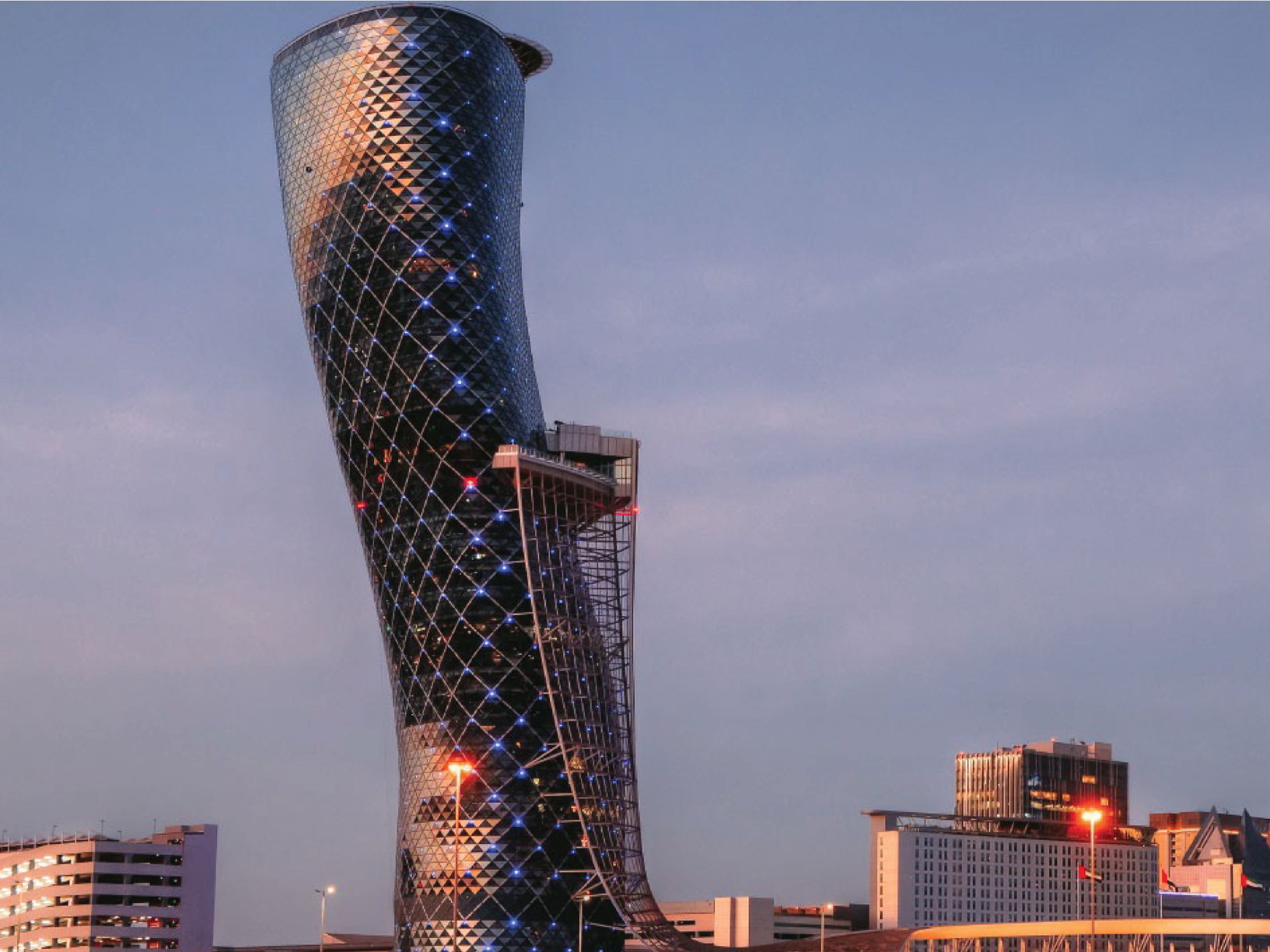
The ADNEC Tower
An oasis to help ideas flow
Much of this activity will take place outside the UN’s accredited Blue Zone. The UAE is creating a second area called the ‘Oasis’, effectively opening the conference to a much broader set of constituents.
“In the Oasis, there would be a hall for hundreds of events, meetings, and talks,” Balalaa explained. “There will be other smaller [venues] for side events and special events, and there will be the exhibition. There will be a platform for signings and announcements to get people excited, and there will be events that focus on businesses, investments, finance, reforms, regulations, which is very critical to the private sector. It’s an opportunity if you have a solution and you have an experience, regardless [of] where in the water cycle you are working”.
The exhibition will combine “technologies, regulations, reforms, plans, [and] countries’ objectives”, allowing visitors to experience both the multilateral discussions surrounding the conference, and the commercial and practical activity needed to deliver its ambitions. The Oasis is also expected to become a venue for commitments to be aired, for the formation of partnerships and announcements, and for dedicated youth engagement.
The timing may prove particularly attractive to investors. Abu Dhabi Finance Week will run concurrently with the water conference, putting a large international financial community in the city at the same time. This provides the opportunity to bring finance closer to water, and to host discussions around the regulatory, data, and transparency barriers which have historically deterred investment in the sector.
Balalaa also seeks to reassure potential delegates concerned about regional security. “It is safe to travel,” he said. “The UAE didn’t stop any planned events. Formula One is still happening. The UN Water Conference is still happening. ADIPEC, the global energy exhibition and conference, is taking place in early November. We have three or four conferences in September, October, and beyond, so our plans are moving ahead,” Balalaa maintains.
For the UAE, then, December 2026 is intended to be much more than another milestone in the international conference calendar. The ambition is to use Abu Dhabi to connect political authority, capital, technology, and project delivery – and then to build an institutional process capable of sustaining that momentum. “Enough talking,” Balalaa asserts. “It’s time to consider how we can deploy this on the ground for the sake of improving people's quality of life.”
First published on globalwaterintel.com